Driving Growth with the Balanced Scorecard (BSC) and Strategic Business Objectives
Asst. Prof. Dr. Parameth Voraseyanont
Clear business objectives define an organization's direction, guiding the selection of strategies to achieve measurable, quantified, and time-bound goals.
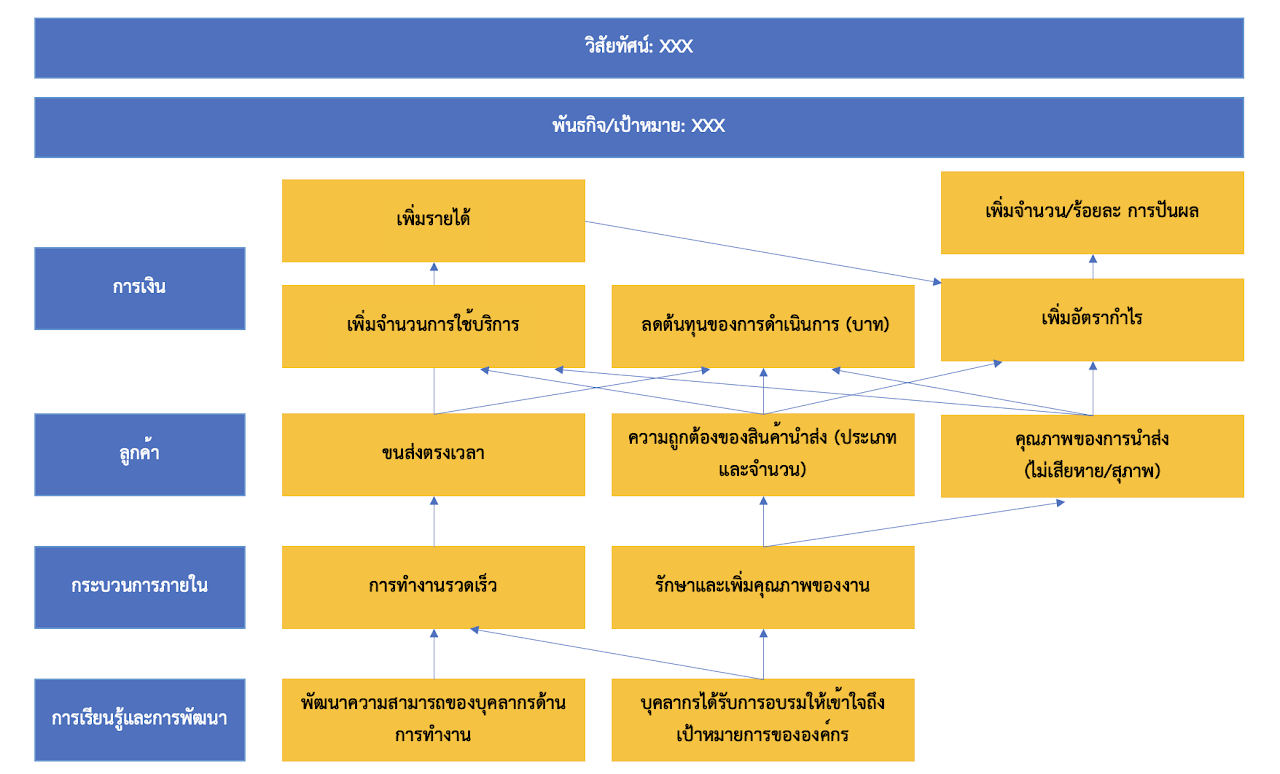
Core Framework: Business objectives comprise Financial Objectives and Strategic Objectives. The Balanced Scorecard (BSC) develops strategic objectives across four perspectives:
• Financial: Dividend growth (THB/share or % of share price), ROI (%), net profit growth rate, total revenue, and cost-to-revenue reduction.
• Customer: Addressable market size (THB/units), customer confidence in products/services, relative market share, comparative customer cost, new product launch success rate, and growth in overseas partners.
• Internal Processes: Efficiency in incoming inspection and warehouse movement, system waste reduction, lower employee turnover, inventory accuracy, workplace accident reduction, quality inspection cost reduction, faster decision-making, and on-time delivery.
• Learning & Growth: Investment in operational assets (IT systems, equipment, machinery), employee skill development, IP acquisition/development, corporate culture transformation, and key talent retention/acquisition.
Key Diagnostic Questions:
• Learning & Growth: What knowledge, skills, and resources are required to excel in our operations?
• Internal Processes: How should we optimize processes to deliver the customer value proposition?
• Customer: Who are our customers, and what value do they expect from our products/services?
• Financial: What are the expectations of our shareholders and stakeholders?
Validating BSC objectives can be carried out using a Strategy Map (see diagram).
Ready to get started?
Contact us today.